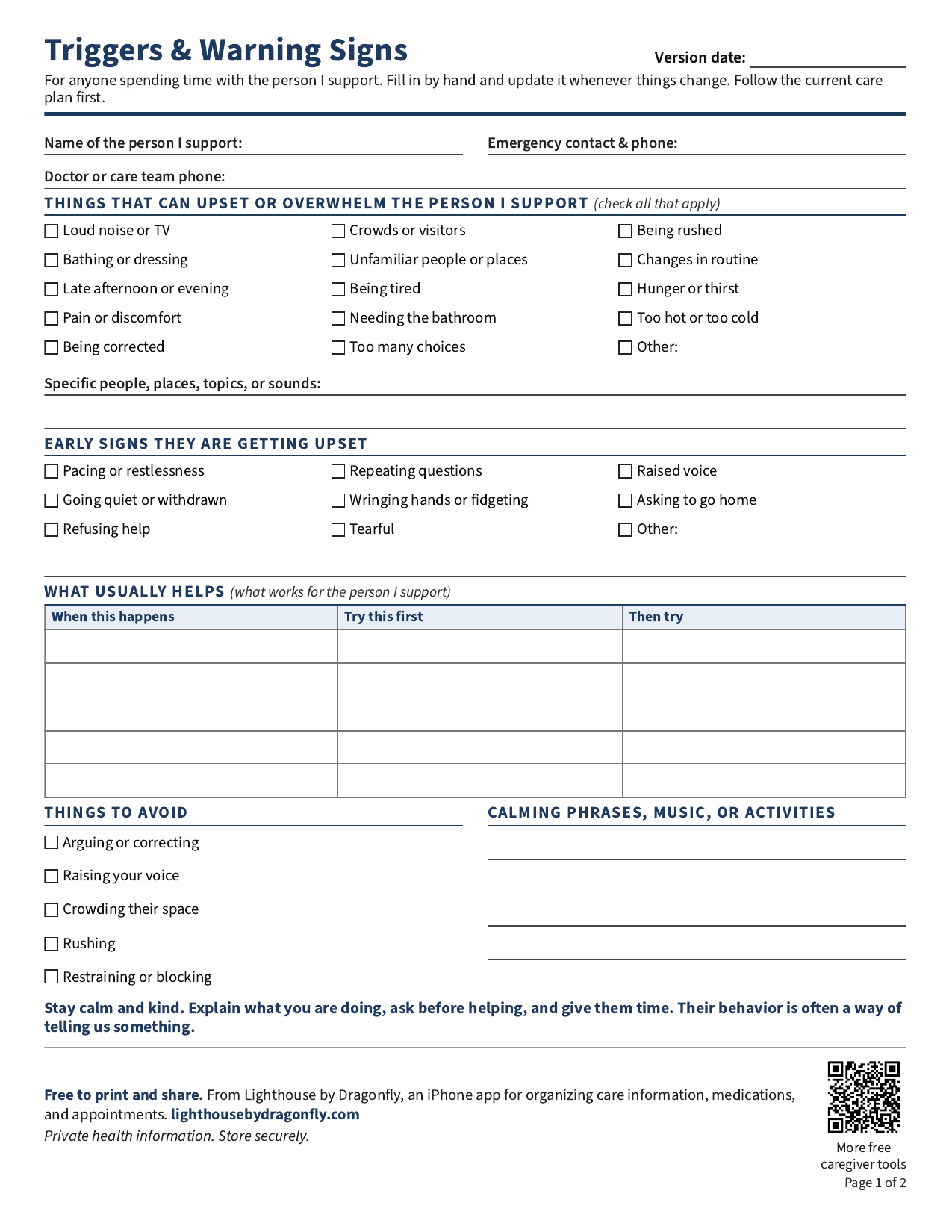
Help another caregiver notice what the person may be communicating
Distress is often a response to pain, fatigue, hunger, overstimulation, unfamiliar routines, or a need the person cannot easily explain. A written guide helps helpers look for causes instead of reacting only to behavior.
The printable separates familiar triggers and early distress signals from changes that may indicate illness or an emergency. It also records calming strategies, reassuring language, and the person’s usual baseline so new changes stand out.
Complete the guide with real examples
- Describe specific sounds, routines, topics, or situations that may overwhelm the person.
- Write what usually helps first, including tone of voice, space, music, food, rest, or a familiar activity.
- Review the warning-sign section with the care team and update the recent-changes log when something is different.
This sheet does not replace the care plan or medical advice. When unsure, call the care team; in an emergency, call 911.