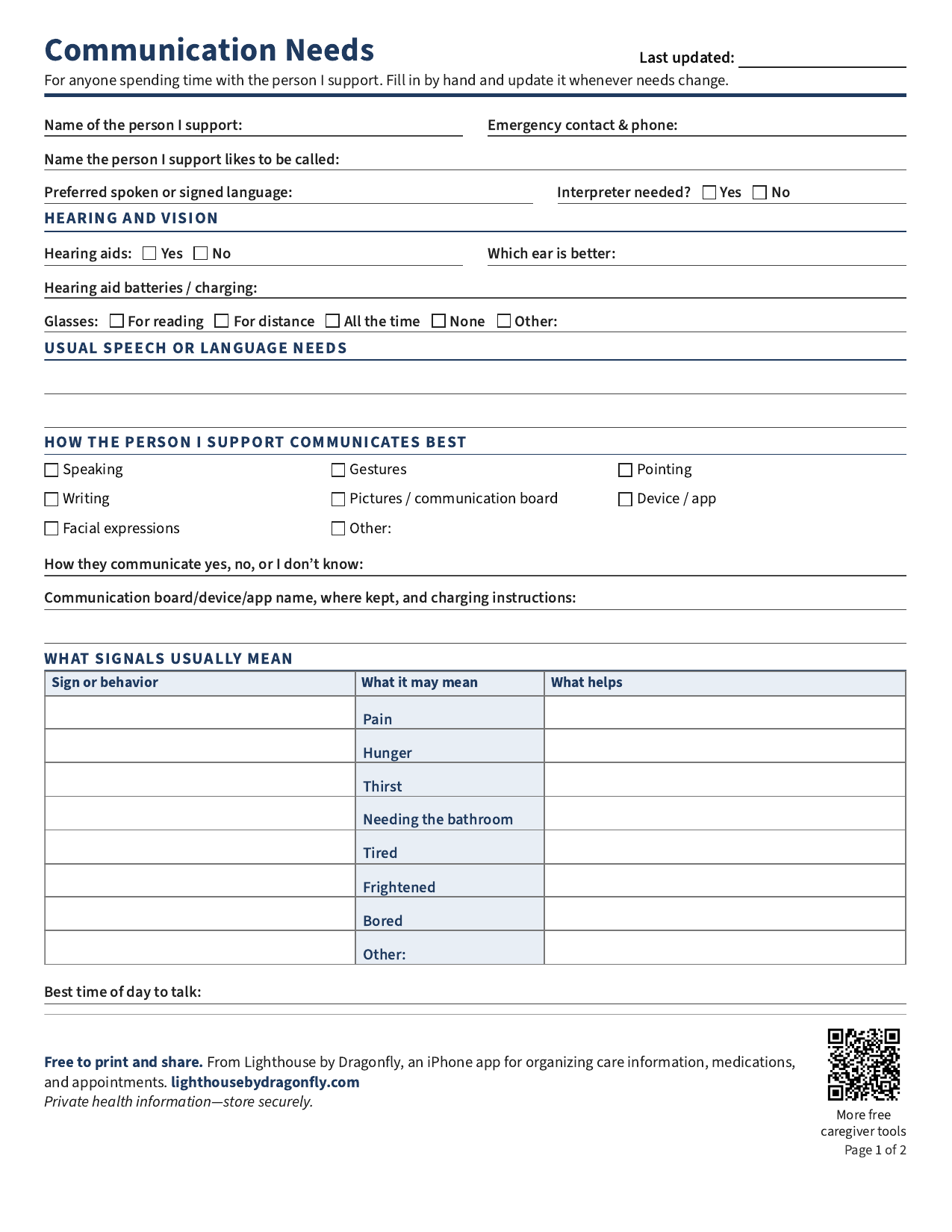
Help every caregiver communicate with the person
Communication may involve words, gestures, facial expressions, devices, routines, behavior, or changes that are easy to miss when someone is unfamiliar. A written guide can help a new or backup caregiver slow down, notice, and respond more respectfully.
This printable creates space for the person’s preferred name, language, sensory needs, communication tools, signals, comforting words, difficult topics, and possible signs of pain or discomfort. Complete it with the person wherever possible so their voice stays at the center.
How to make the guide useful
- Describe what the person does and what it may mean without labeling or judging them.
- Write down approaches that help: shorter questions, extra response time, visual cues, familiar phrases, or a quieter setting.
- Update the guide when hearing, vision, speech, devices, pain signals, or preferences change.
New or sudden communication changes can have many causes. Contact the appropriate health professional for guidance and seek urgent help when needed.